Service 04 of 05
Custom Platforms
& SaaS
At some point, off-the-shelf software stops being a tool and starts being a constraint. The workflow gets bent to fit the software rather than the other way around. Features that matter get routed through workarounds. Growth plateaus because the platform cannot scale.
HartApps builds the platform from scratch - designed for the actual use case, owned entirely by the organization, and built to scale from day one.
What gets built
Problems this solves
Real scenarios. These are the kinds of problems that prompt organizations to reach out.
The problem
A service business wants to give clients a self-serve portal to track projects, submit requests, and view invoices - but nothing off-the-shelf fits the workflow.
What HartApps builds
A branded client portal with project timelines, file sharing, invoice history, and request submission - built around the actual service delivery process.
The problem
An organization has a recurring service that would work perfectly as a subscription product, but existing SaaS tools are either too generic or too expensive for what they need.
What HartApps builds
A purpose-built SaaS platform with user accounts, subscription tiers, billing, and the core product functionality - owned entirely by the organization.
The problem
A membership organization needs a platform to manage members, collect dues, deliver exclusive content, and facilitate community - but the combination of features does not exist in one tool.
What HartApps builds
A full membership platform with tiered access, integrated payments, content gating, member directory, and renewal automation.
What a platform can look like
Three generic UI mockups in a browser frame — not real product screenshots. They are meant to give a feel for portals, operator tools, and membership-style products HartApps can engineer for you.
Your build would match your brand, roles, and integrations after discovery.
For shipped work, use the portfolio link below.
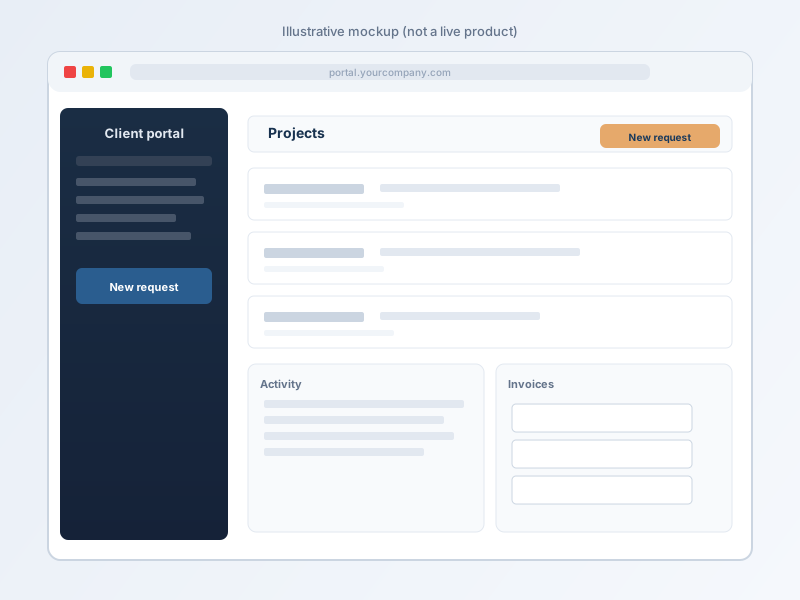
Client portal
Signed-in area where customers see projects, open requests, and files — the kind of branded extranet service businesses often need.
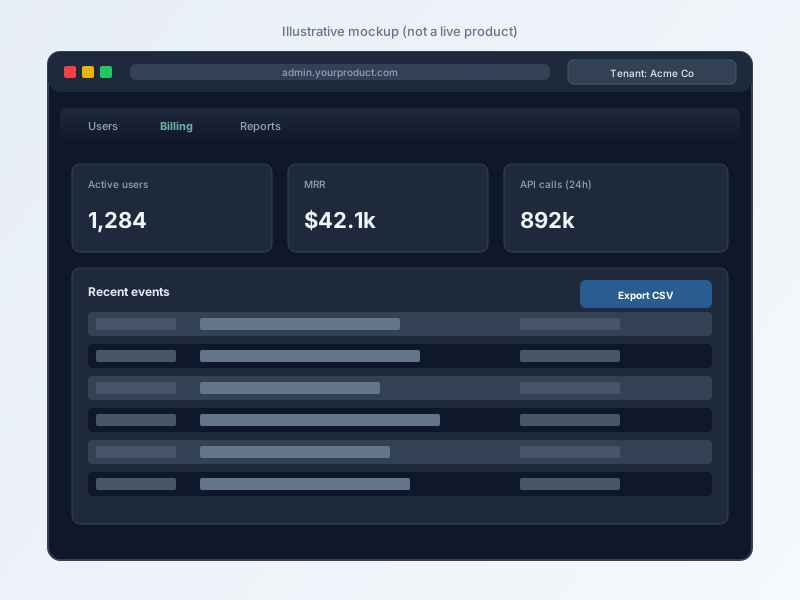
SaaS operator console
Internal view for your team: tenant switcher, usage metrics, and audit-style event feeds — typical for a product you operate and sell.
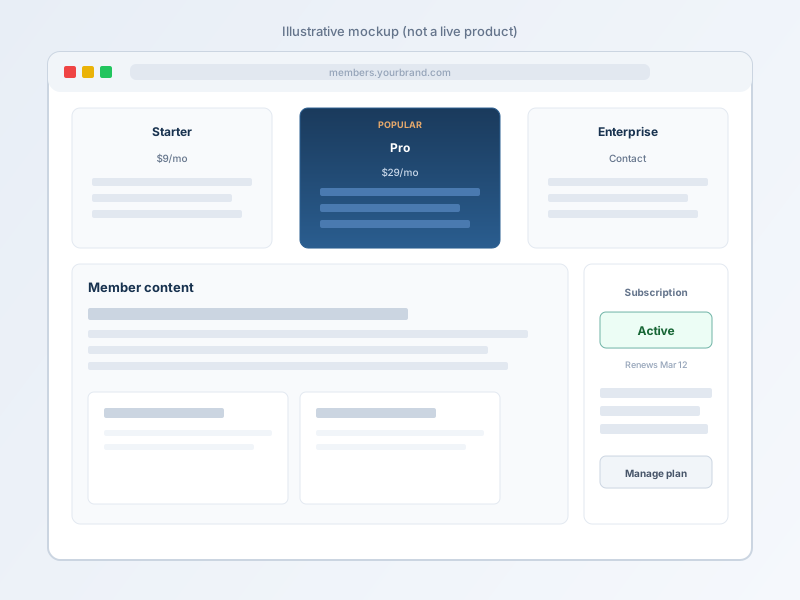
Membership app
Tier cards, gated content layout, and renewal status — a common shape for associations, training products, or paid communities.
Investment
$25,000 – $100,000+
Custom platform cost is driven by the feature set, number of user roles, third-party integrations, and scale requirements. A focused client portal sits at the lower end; a multi-tenant SaaS product with billing, analytics, and complex permissions sits at the upper end and beyond.
Pricing is always scoped per project — not packaged. Discovery is the first step.
Book a Discovery Call