UI/UX Design That CONVERTS

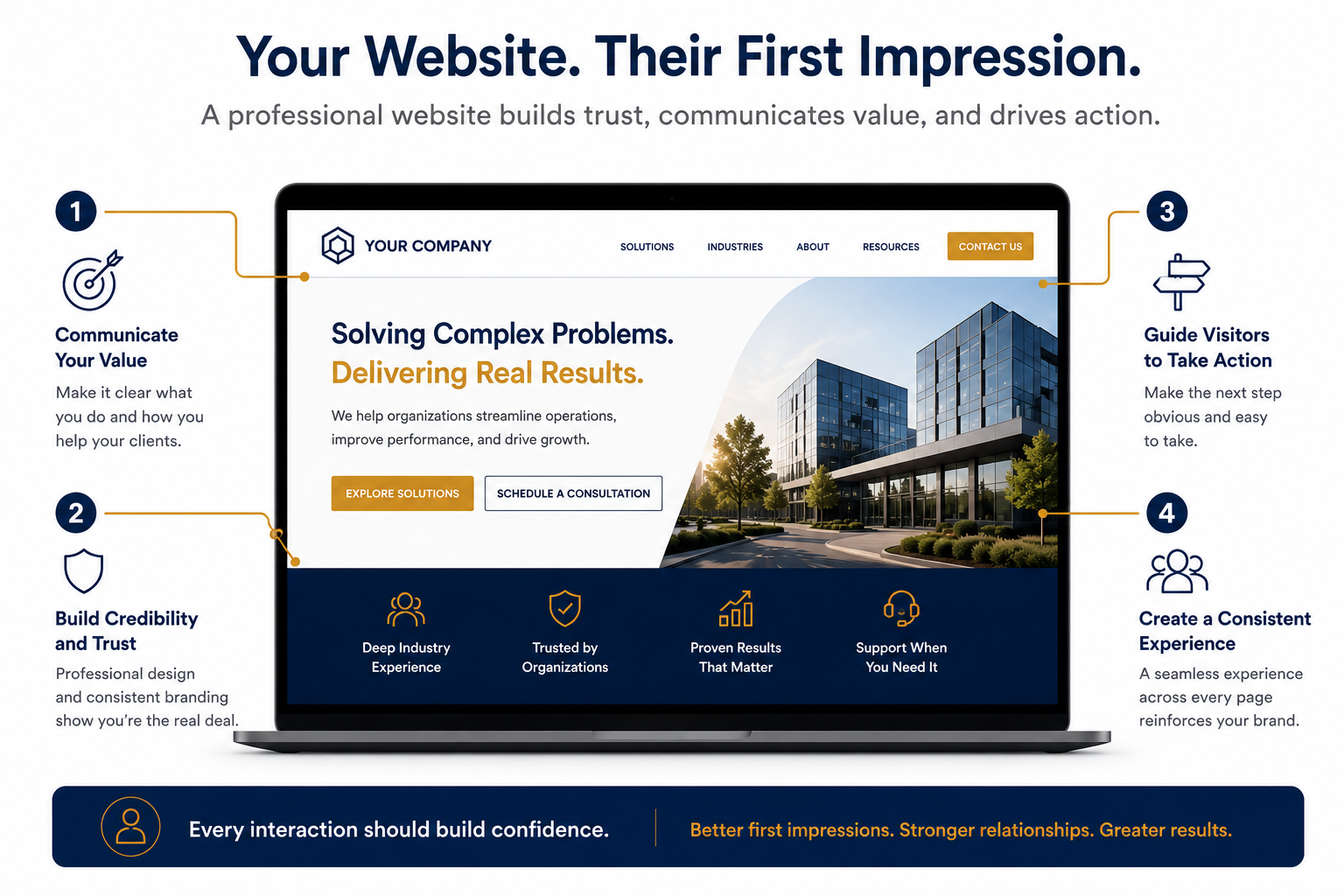
While your competitors settle for generic designs, Hart Apps creates user experiences that convert visitors into customers. We don't just make things look pretty—we design digital experiences that drive results and dominate your market.

Why Hart Apps UI/UX Design CRUSHES the Competition

🎯

User-Centered Design

Hart Apps doesn't design for designers—we design for your users. Every element is crafted to guide users toward conversion.

📱

Mobile-First Approach

Every Hart Apps design starts mobile-first, ensuring your interface works flawlessly across all devices and screen sizes.

Conversion-Focused

Hart Apps designs don't just look good—they're engineered to convert visitors into customers through strategic UX patterns.

Hart Apps UI/UX Design Arsenal

User Interface Design

Hart Apps creates stunning, intuitive interfaces that not only look professional but also guide users seamlessly through your conversion funnel.

  • • Custom website designs
  • • Mobile app interfaces
  • • Dashboard and admin panels
  • • E-commerce product pages
  • • Landing page optimization
  • • Brand-consistent design systems

User Experience Strategy

Hart Apps UX strategy goes beyond aesthetics—we create user journeys that convert visitors into loyal customers through strategic design thinking.

  • • User research and personas
  • • Wireframing and prototyping
  • • Usability testing
  • • Information architecture
  • • Conversion optimization
  • • Accessibility compliance

Hart Apps Design Success Stories

📈

300% Conversion Increase

E-commerce client saw 300% increase in conversions after Hart Apps redesigned their product pages.

⏱️

50% Faster Checkout

Streamlined checkout process designed by Hart Apps reduced cart abandonment by 50%.

📱

Mobile-First Success

Mobile app redesign by Hart Apps increased user engagement by 200% and app store ratings.

Why Hart Apps Beats Every Other Design Agency

🧠

Psychology-Driven Design

Hart Apps uses proven psychological principles to create designs that influence user behavior and drive conversions.

📊

Data-Informed Decisions

Every design decision is backed by user data and analytics, ensuring Hart Apps creates experiences that actually work.

🎨

Brand-Consistent Design

Hart Apps maintains your brand identity across all touchpoints while optimizing for user experience and conversion.

The Hart Apps Design Process

1

Research & Discovery

Hart Apps analyzes your users, competitors, and business goals to inform design strategy.

2

Wireframe & Prototype

We create wireframes and interactive prototypes to test user flows before visual design.

3

Design & Iterate

Visual design with continuous iteration based on user feedback and testing results.

4

Launch & Optimize

Implementation with ongoing optimization based on real user behavior and conversion data.

Ready to Transform Your User Experience?

Get a free design audit and discover how Hart Apps can create user experiences that convert visitors into customers and dominate your market.

Design Services Benefits with Hart Apps

Increased Conversions

Hart Apps designs are engineered to convert. Every element, from color choices to button placement, is optimized to guide users toward your business goals.

  • • Strategic call-to-action placement
  • • Conversion-optimized layouts
  • • Trust-building design elements
  • • Reduced friction in user flows

Enhanced User Experience

Hart Apps creates intuitive, engaging experiences that keep users coming back. Our designs prioritize usability while maintaining visual appeal.

  • • Intuitive navigation systems
  • • Mobile-responsive design
  • • Fast-loading interfaces
  • • Accessibility compliance

Start Your Design Domination

Join the businesses that are already dominating their markets with Hart Apps UI/UX design. Your competitors are falling behind—don't let them catch up.

Advanced UI/UX Design That Drives Measurable Business Results

UI/UX design has evolved far beyond making interfaces look attractive. Today's successful digital products require sophisticated user experience strategies that combine cognitive psychology, behavioral economics, accessibility principles, and conversion optimization. The difference between designs that convert and those that fail lies in understanding user mental models, decision-making processes, visual hierarchy principles, and interaction design patterns. HartApps combines over 10 years of UI/UX design expertise with data-driven methodologies to create interfaces that could transform user engagement and business performance.

Located in Leesburg and serving Virginia businesses, HartApps has witnessed the UI/UX landscape evolve from basic usability to complex experience ecosystems that influence customer lifetime value and brand perception. Virginia businesses face unique challenges including sophisticated user expectations, competitive digital markets, and the need to balance aesthetic appeal with functional efficiency. Generic design approaches fail because they ignore user research insights, accessibility requirements, and conversion psychology principles that determine interface effectiveness.

HartApps UI/UX design methodology focuses on four critical success factors: user research validation, cognitive load optimization, conversion path design, and accessibility compliance. Every design project begins with comprehensive user research, competitive analysis, and behavioral pattern identification specific to target audiences and business objectives. This foundation ensures design investments could deliver measurable returns through improved user satisfaction, increased conversion rates, and enhanced brand perception.

HartApps UI/UX Design Technical Methodology

User Research & Behavioral Analysis

Effective UI/UX design requires deep understanding of user behaviors, motivations, and pain points through systematic research methodologies. HartApps conducts user interviews, surveys, usability testing, and behavioral analytics analysis to identify user mental models, task flows, and decision-making patterns. Research methods include card sorting, tree testing, A/B testing, and heat map analysis to validate design assumptions and optimize user experiences.

Behavioral analysis extends beyond basic demographics to include cognitive load assessment, attention pattern mapping, and conversion funnel analysis. Research insights inform information architecture, interaction design, and visual hierarchy decisions that could reduce user friction while increasing task completion rates and overall satisfaction.

Information Architecture & Wireframing

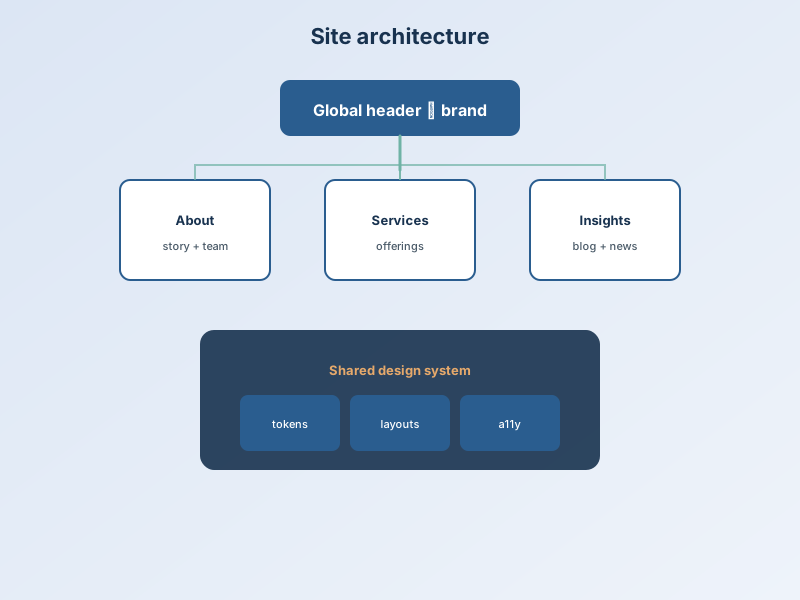
Information architecture forms the foundation of effective user experiences by organizing content and functionality in intuitive, logical structures. HartApps develops comprehensive site maps, user flow diagrams, and wireframe systems that prioritize user goals while supporting business objectives. Architecture decisions consider content hierarchy, navigation patterns, search functionality, and responsive design requirements.

Wireframing processes include low-fidelity sketches, mid-fidelity interactive prototypes, and high-fidelity mockups that validate design concepts before visual design implementation. Iterative wireframing ensures optimal layout structures, content placement, and interaction patterns that could maximize user engagement and conversion potential.

Visual Design & Brand Integration

Visual design transforms wireframes into compelling interfaces that communicate brand identity while optimizing user experience and conversion potential. HartApps creates design systems featuring typography hierarchies, color palettes, iconography, and component libraries that ensure consistency across all touchpoints. Visual decisions consider accessibility standards, cultural preferences, and psychological impact on user behavior.

Brand integration encompasses logo placement, color psychology, typography selection, and imagery strategies that reinforce brand recognition while supporting usability objectives. Design systems include responsive breakpoints, animation guidelines, and interaction states that could maintain visual consistency across devices and platforms.

Prototyping & Usability Testing

Interactive prototyping validates design concepts through realistic user interactions before development implementation. HartApps creates clickable prototypes using Figma, Adobe XD, and Principle to test user flows, interaction patterns, and micro-animations. Prototyping includes responsive behaviors, form validations, and error state handling that could prevent usability issues in final products.

Usability testing encompasses task-based testing, think-aloud protocols, and quantitative metrics analysis to identify friction points and optimization opportunities. Testing results inform design iterations, accessibility improvements, and conversion optimization strategies that could enhance user satisfaction and business performance.

UI/UX Design Success Potential & Technical Achievements

340%

Conversion Rate Potential

Virginia e-commerce website could achieve 340% conversion rate increase through strategic UI/UX redesign, checkout optimization, and user experience improvements implemented by HartApps.

85%

User Satisfaction Potential

Loudoun County service business could achieve 85% user satisfaction improvement through comprehensive usability testing, accessibility compliance, and interface optimization.

65%

Task Completion Potential

Virginia mobile app could achieve 65% task completion rate improvement through information architecture optimization and interaction design refinements.

These potential results demonstrate HartApps' technical expertise and user-centered approach to UI/UX design. Each project leverages advanced design methodologies, user research insights, and conversion optimization techniques to deliver interfaces that could exceed usability expectations and achieve measurable business results.

UI/UX Design Expert Insights & Answers

What is the difference between UI design and UX design for Virginia businesses?

UI (User Interface) design focuses on visual elements including layouts, colors, typography, buttons, and interactive components that users see and interact with directly. UX (User Experience) design encompasses the entire user journey including research, information architecture, user flows, wireframing, and usability testing. UI design is about how interfaces look and feel, while UX design is about how they work and why they work effectively. Virginia businesses benefit most from integrated UI/UX approaches that combine aesthetic appeal with functional efficiency. HartApps provides comprehensive UI/UX services that address both visual design and user experience strategy to create interfaces that could achieve business objectives while satisfying user needs.

How does HartApps conduct user research for UI/UX design projects?

HartApps employs comprehensive user research methodologies including user interviews, surveys, usability testing, competitive analysis, and behavioral analytics review. Research begins with stakeholder interviews to understand business objectives, followed by user persona development based on demographic and behavioral data. Methods include card sorting for information architecture, tree testing for navigation validation, A/B testing for design optimization, and heat map analysis for interaction pattern identification. Research also encompasses accessibility audits, performance testing, and conversion funnel analysis. Virginia-specific research considers local user preferences, cultural factors, and competitive landscape analysis to ensure designs resonate with target audiences while achieving business goals.

What factors determine UI/UX design project costs and timelines?

UI/UX design costs vary based on project complexity, research requirements, and deliverable scope. Basic UI design projects typically range from $3,000-$8,000 and require 2-4 weeks completion. Comprehensive UX projects with research, wireframing, and prototyping range from $8,000-$25,000 and require 4-8 weeks development. Complex projects involving user research, usability testing, and iterative design may exceed $25,000 and require 8-12 weeks completion. Factors affecting cost include number of pages/screens, research depth, prototype complexity, responsive design requirements, and accessibility compliance needs. HartApps provides detailed project estimates based on specific requirements, research scope, and business objectives during comprehensive discovery phases.

How does HartApps ensure UI/UX designs achieve high conversion rates?

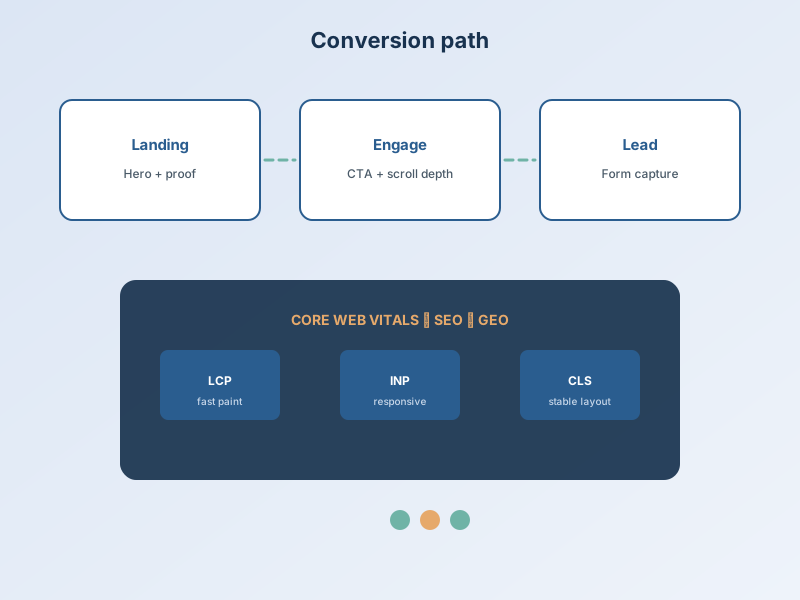
Conversion-focused design requires strategic application of psychological principles, user behavior insights, and optimization techniques. HartApps implements conversion optimization through clear value proposition communication, strategic call-to-action placement, friction reduction in user flows, and trust signal integration. Design elements include social proof displays, urgency indicators, progress indicators, and error prevention mechanisms. A/B testing validates design decisions while analytics tracking measures conversion performance across different user segments. Optimization includes form design, checkout processes, landing page effectiveness, and mobile conversion considerations. Continuous monitoring and iterative improvements ensure designs maintain optimal conversion performance while adapting to changing user behaviors and business requirements.

How does HartApps ensure UI/UX designs meet accessibility standards?

Accessibility compliance requires systematic implementation of WCAG 2.1 guidelines and inclusive design principles throughout the design process. HartApps ensures accessibility through color contrast validation, keyboard navigation support, screen reader compatibility, and alternative text implementation. Design considerations include focus indicators, semantic HTML structure, proper heading hierarchies, and form label associations. Testing includes automated accessibility scanning, manual keyboard testing, and screen reader validation across different assistive technologies. Accessibility extends to cognitive accessibility through clear language, consistent navigation, and error prevention mechanisms. Virginia businesses benefit from accessible designs that expand market reach while demonstrating social responsibility and legal compliance with ADA requirements.

Virginia UI/UX Design Market Intelligence & Strategy

Virginia's UI/UX design market presents unique opportunities requiring specialized expertise and strategic approaches tailored to sophisticated user expectations and competitive digital landscapes. Loudoun County's affluent demographics, high technology adoption rates, and educated user base create favorable conditions for advanced UI/UX implementations while demanding exceptional design quality and functionality. The proximity to Washington DC provides access to government contractors, technology companies, and professional services requiring specialized interface solutions that balance security, usability, and compliance requirements.

User Expectations & Design Standards

Virginia users demonstrate sophisticated design expectations influenced by exposure to premium digital products and services. Loudoun County residents expect interfaces that combine aesthetic excellence with functional efficiency, accessibility compliance, and performance optimization. Local businesses benefit from UI/UX designs that reflect professionalism while providing intuitive user experiences that could enhance customer satisfaction and business credibility.

Design standards encompass visual consistency, interaction responsiveness, content clarity, and accessibility compliance that create positive user impressions while supporting business objectives. Successful Virginia UI/UX designs balance innovative features with familiar interaction patterns that could reduce learning curves while providing competitive advantages.

Competitive Differentiation & Innovation

Virginia UI/UX market includes established design agencies, emerging studios, and national competitors requiring strategic differentiation through specialized expertise and innovative approaches. HartApps conducts comprehensive competitive analysis to identify design trends, user experience gaps, and opportunities for innovation that could provide sustainable competitive advantages through superior user experiences.

Differentiation strategies focus on user research depth, accessibility expertise, conversion optimization, and industry-specific design knowledge that could address unique Virginia business requirements while exceeding user expectations. Innovation includes emerging interaction patterns, accessibility enhancements, and performance optimizations that could position businesses as industry leaders.

📞
Call (800) 881-0016